Optimization: USDT TRC-20 transfers
This guide explains USDT TRC-20 transfers through the practical task of optimization for TRON and USDT users.
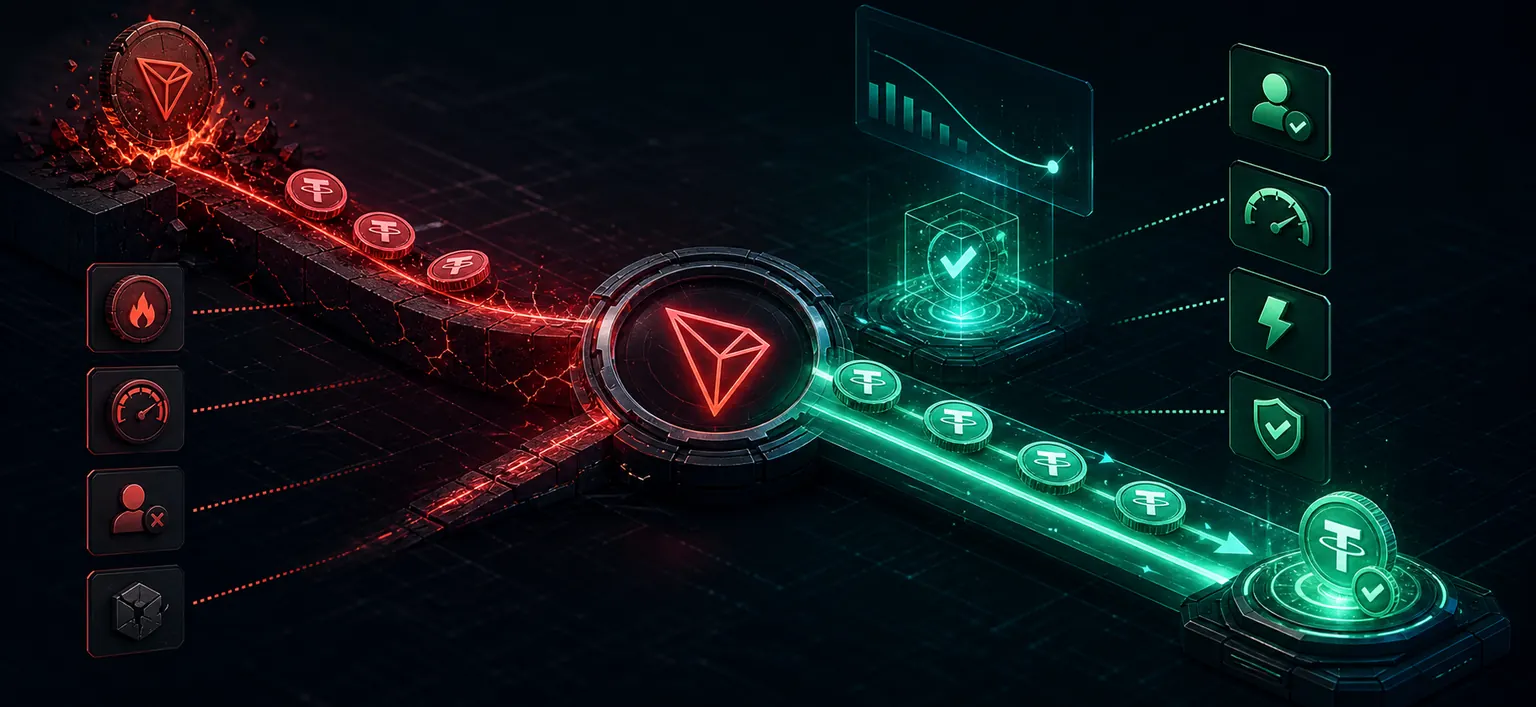
USDT TRC-20 transfers is part of the TRON resource and transaction workflow. Check current account resources and on-chain parameters before signing. USDT on TRON is a smart-contract token, so a transfer consumes Bandwidth and usually Energy.
Overview: USDT TRC-20 transfers
Optimization
USDT on TRON is a smart-contract token, so a transfer consumes Bandwidth and usually Energy.
Reduce avoidable cost and failures by forecasting demand, choosing the right resource source and measuring receipts.
TRON uses Bandwidth for transaction bytes and Energy for smart-contract computation. USDT TRC-20 transfers are contract calls, so both resources can affect the result and final cost.
Resources can come from daily allowances, TRX staking, or delegation from another account. Delegated Energy can be assigned temporarily without transferring the user's USDT.
How it works: USDT TRC-20 transfers
Optimization: USDT TRC-20 transfers
Reduce avoidable cost and failures by forecasting demand, choosing the right resource source and measuring receipts.
- Open the wallet or explorer and confirm the TRON network, address, token and amount.
- Read available Energy and Bandwidth, then estimate the resources required by the transaction.
- Compare the direct TRX burn with staking or a delegated Energy quote.
- Sign only after checking the fee limit, then verify the transaction receipt on-chain.
Costs and resources: USDT TRC-20 transfers
Do not rely on a fixed fee copied from an old article. Energy price is an on-chain parameter and contract usage can change. Read live chain parameters and keep a safety margin.
TRX may be burned
Any Energy or Bandwidth not covered by account resources is charged using current network parameters.
The resource arrives first
Compare the rental amount, duration and price with the estimated direct network cost.
Checklist: Optimization: USDT TRC-20 transfers
Quick answer
- Confirm that the destination uses the TRON TRC-20 network.
- Verify the complete address, not only its first and last characters.
- Check TRX balance, Energy and Bandwidth before signing.
- Estimate resource usage and review the fee limit.
- After sending, confirm a successful result in the transaction receipt.
Frequently asked questions: USDT TRC-20 transfers
How it works: Optimization: USDT TRC-20 transfers?
Reduce avoidable cost and failures by forecasting demand, choosing the right resource source and measuring receipts. TRON uses Bandwidth for transaction bytes and Energy for smart-contract computation. USDT TRC-20 transfers are contract calls, so both resources can affect the result and final cost.
Costs and resources: USDT TRC-20 transfers?
Do not rely on a fixed fee copied from an old article. Energy price is an on-chain parameter and contract usage can change. Read live chain parameters and keep a safety margin. Any Energy or Bandwidth not covered by account resources is charged using current network parameters.
Checklist: Optimization: USDT TRC-20 transfers?
Confirm that the destination uses the TRON TRC-20 network. Check TRX balance, Energy and Bandwidth before signing. After sending, confirm a successful result in the transaction receipt.
Use delegated Energy: USDT TRC-20 transfers?
Compare the rental amount, duration and price with the estimated direct network cost. Resources can come from daily allowances, TRX staking, or delegation from another account. Delegated Energy can be assigned temporarily without transferring the user's USDT.
Primary sources: USDT TRC-20 transfers
TRON protocol documentation
Protocol explanations are based on official TRON developer documentation. Live values should always be read from the network.
Continue learning: USDT TRC-20 transfers

USDT Gift Card Review: Save, Give and Share Before You Set Up a Wallet
Read guide →
Beginner's guide: USDT TRC-20 transfers
Read guide →
How it works: USDT TRC-20 transfers
Read guide →
Cost breakdown: USDT TRC-20 transfers
Read guide →
Requirements: USDT TRC-20 transfers
Read guide →
Optimization: TRON Energy
Read guide →
Optimization: TRON Bandwidth
Read guide →
Optimization: TRX fee burning
Read guide →
Optimization: TronLink wallet
Read guide →