Article languages: English
USDT Gift Card Review: Save, Give and Share Before You Set Up a Wallet
A crypto gift should begin with the person receiving it. Buyusdtgiftcard.com offers an appealing way to put that person first: choose a USDT amount, make it a card, and let the recipient decide when and where to redeem it.
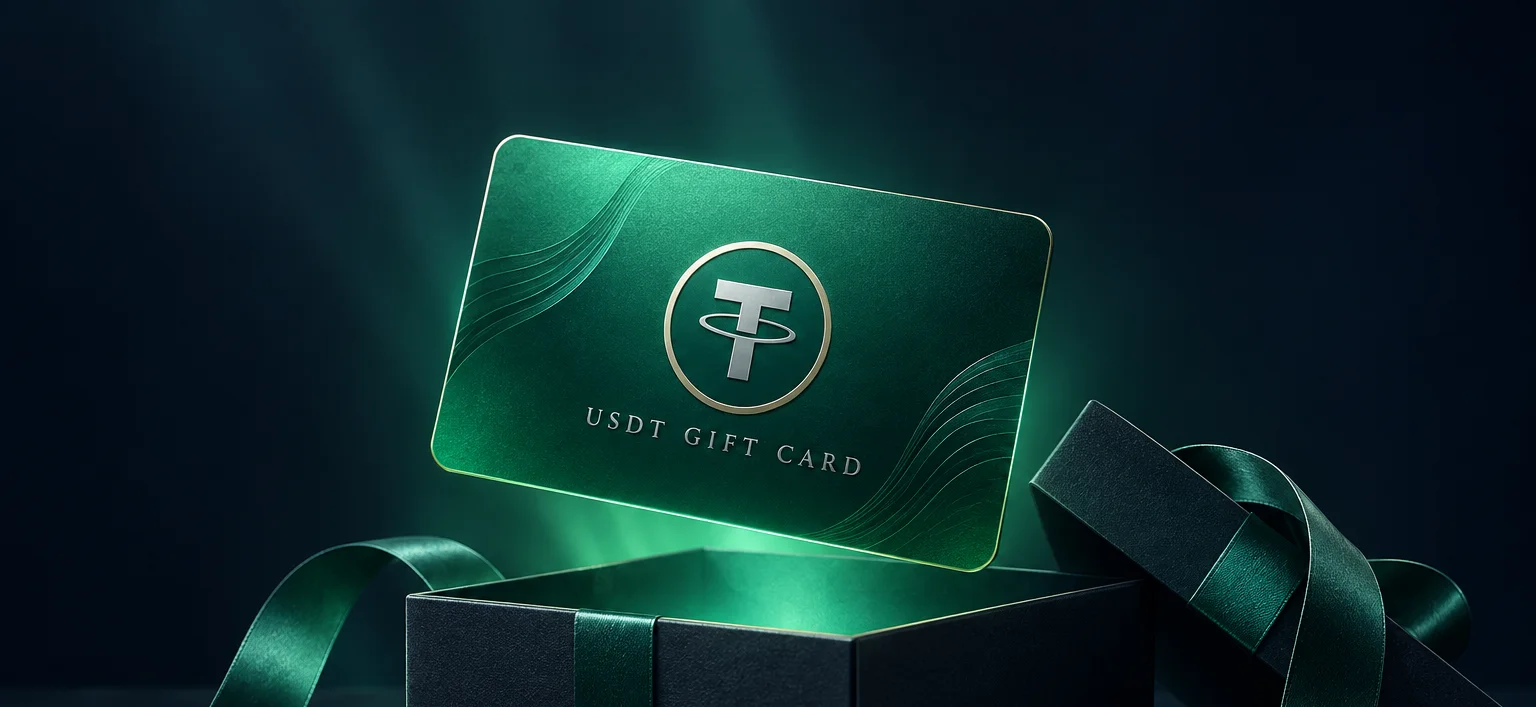
The short verdict: a useful bridge between a gift and a crypto transfer
The strongest reason to use USDT Gift Card is not a new token or a complicated financial feature. It is the ability to send USDT as a gift without first turning the occasion into a wallet-setup tutorial. You can prepare the gift without knowing the recipient’s blockchain address. They can receive it, keep it privately, or pass the unused card to someone else before deciding to redeem.
That is a meaningful improvement for a birthday, a thank-you or a remote team reward. The artwork and optional name make a digital amount feel deliberately chosen. The private redemption code lets the gift arrive before the recipient has settled on a wallet.
This is a much-needed kind of service for people who want to give USDT in a familiar, personal format. Its value is strongest when the recipient is not ready to receive an immediate on-chain transfer. A compatible TRON address is still required at redemption, and the unused card depends on the service honouring its payout.
Why buy a USDT gift card when a direct transfer already exists?
A direct transfer works well when both people already know their way around crypto. For a gift, the sequence can be awkward: ask for an address, explain which network to select, check that the destination supports the token, and spoil the surprise before anything has arrived.
The service changes that sequence. The buyer chooses the value and presentation now; the recipient chooses the receiving address later. The gift can be delivered as an image or private link through a familiar messaging channel. There is no need to create a recipient account on the gift-card website.
The distinction matters because a gift is also an experience. A personalised card carries a message that a transaction hash cannot. This is where a digital crypto gift can justify an additional purchase fee: it combines a presentation, a transferable claim and a separate redemption process.
“No crypto wallet needed”: what you can actually do
You do not need to set up a crypto wallet just to receive and save the card. You can keep the unused gift in its card format and choose what to do with it later. You can also give it to another person without first redeeming it into your own wallet and sending a second blockchain transaction.
In practical language, that can feel like “keeping USDT on a card.” Technically, the card holds a one-time claim to its stated USDT value. The tokens are not stored inside the image or on a plastic card, and the code is not a self-custody private key. The service must remain able to deliver the payout.
When someone wants to receive the actual tokens, they provide a TRON address that accepts USDT TRC-20. That may be a personal wallet or a suitable exchange deposit address. An exchange can avoid the need to manage a separate wallet app, but its supported networks, minimum deposits and account requirements still apply.
The buyer also needs a way to fund the invoice in the supported cryptocurrency. The current purchase flow accepts USDT TRC-20 or TRX on TRON. Receiving a gift without wallet setup does not mean that the purchase is paid by an ordinary bank card.
From purchase to a gift someone can keep or pass on
1. Choose the value and make it personal
The published terms list a current face-value range of 10–5,000 USDT. The storefront offers preset amounts alongside personalisation. Designs include Emerald, Obsidian, Pearl, Botanica, Mint, Champagne, Ocean, Aurora, Sunset and Celebration. An optional recipient name and a live preview make the card feel like a gift rather than a payment request.
2. Pay the exact invoice
The buyer selects USDT or TRX, enters a delivery email and checks the final invoice. It includes a purchase fee and a small identifying amount. Copy the entire payment amount, including its decimal places. If paying from an exchange, check what will actually arrive after withdrawal fees. The invoice countdown governs payment timing; the terms describe a normal 30-minute window.
3. Save the issued card
After an eligible payment is confirmed, the card is available on the private order page and a copy is emailed to the buyer. The service describes a downloadable card image, a code, a QR link and sharing options supported by the device. Email delivery and card issuance are separate: a delayed email does not necessarily mean the card is missing.
4. Give it privately, now or later
The unused card can be retained for an occasion or sent directly to its intended recipient. Published terms say issued cards do not expire. The code behaves as a bearer secret: whoever holds it can request redemption. That enables passing a gift on, but it also means a previous holder could retain a copy. Forwarding an image does not prove exclusive ownership.
5. Redeem once for the full face value
The recipient checks the card, enters the compatible TRON address and confirms it. The service arranges its outgoing transfer resources and says it sends the full USDT face value without deducting a redemption fee. Its guide to buying, sharing and redeeming a USDT gift card explains the order and payout stages.
This is a whole-card redemption. You cannot spend a portion and leave the remainder, reload the same card, or redeem it again after payout. Network confirmation and exchange account crediting can take additional time after submission.
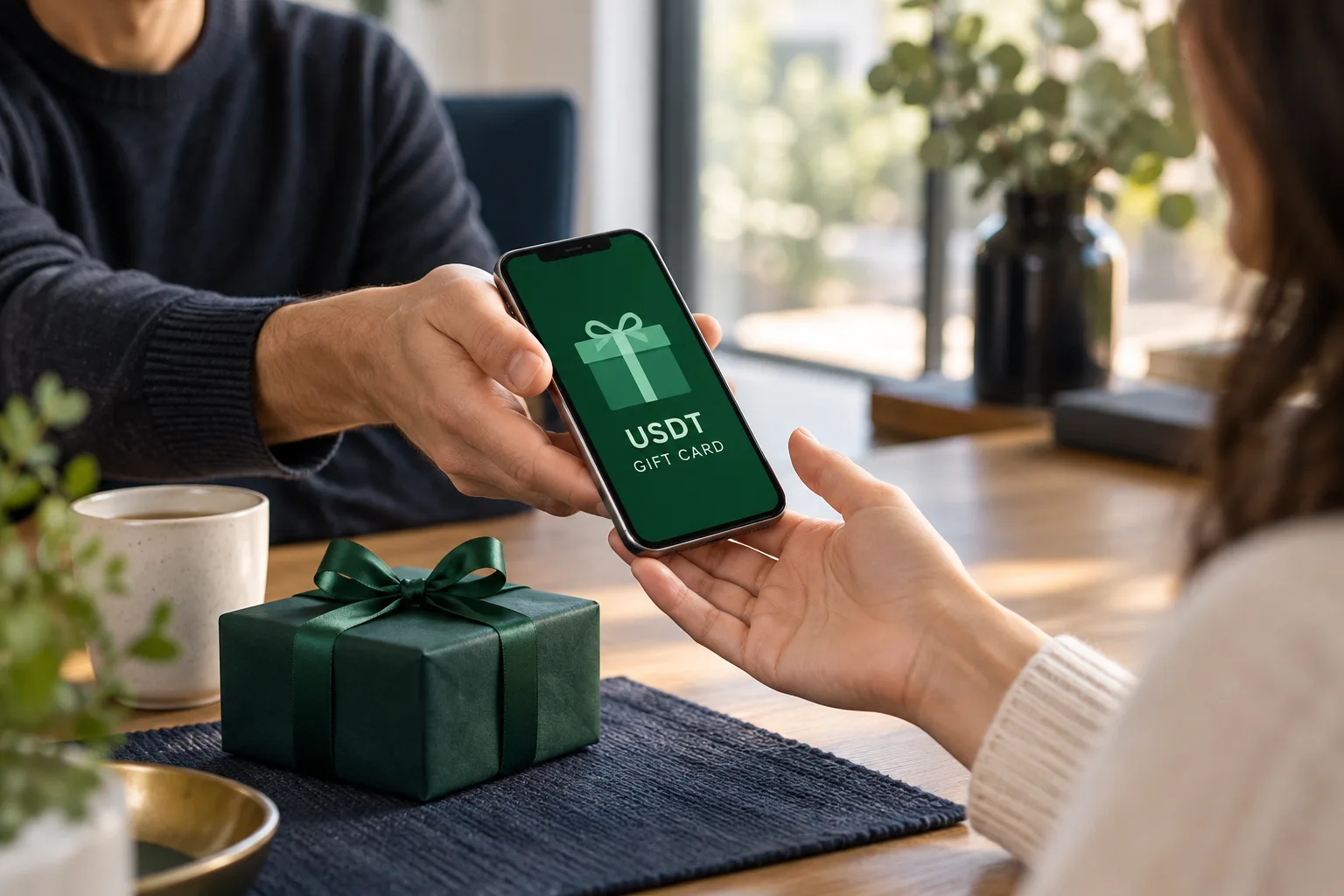
Who could find this service especially useful?
People giving a first crypto gift
A friend may be interested in USDT without having selected a wallet. A gift card gives them something they can receive immediately and redeem after learning the basics. The giver should still explain the private code and the TRON-only payout, rather than assume that a newcomer will recognise them.
Friends and families in different places
A digital card does not need physical shipping. It can be sent with a personal message and kept for a birthday or celebration. This is useful where both sides can use the supported asset and service; it is not a promise of universal availability or automatic conversion into local cash.
Remote teams, community organisers and creators
A personalised card can make a one-off thank-you, contribution reward or contest prize easier to present. The organiser need not collect every recipient’s wallet address before giving the reward. These are potential use cases, not a claim that the website supplies bulk issuance, payroll processing or an enterprise API.
Existing USDT users who want a better presentation
Experienced users may not need help with a wallet, yet still prefer an attractive card to a bare transfer. Someone holding TRX can also choose a TRX invoice while giving a gift denominated in USDT. The recipient receives the stated USDT value rather than taking over the buyer’s TRX conversion decision.
People who want to prepare a gift in advance
An unused card can be saved and given later. The lack of a stated expiry supports that workflow, although it does not make the card a guaranteed long-term savings product. The service’s operational continuity remains part of the decision.
The value, fees and limitations at a glance
| Question | What the service publishes |
|---|---|
| What is purchased? | A digital, one-time claim denominated in USDT. |
| How is it funded? | USDT TRC-20 or TRX on TRON; follow the chosen invoice. |
| What does the buyer pay? | Face value, purchase fee and a small identifying amount; sending or withdrawal fees may be separate. |
| What does the recipient receive? | The full card value in USDT TRC-20, with no service redemption fee deducted. |
| Does it expire? | Issued unused cards have no expiry; purchase invoices have a deadline. |
| Can it be spent gradually? | No. Full-value, one-time redemption. |
| Is it a bank or merchant payment card? | No. It is a digital gift claim redeemed through the service. |
On the storefront reviewed on September 15, 2026, a 100 USDT example displayed a 1 USDT service fee and a 101 USDT subtotal before the small invoice identifier. That is an observed example, not a guaranteed tariff for every denomination or future order. The issued invoice determines the exact payment.
The recipient’s full face-value payout is a useful feature: they do not have to send the service extra TRX to release the gift. Moving the redeemed USDT onward is a separate transaction and can carry its own resource costs. WikiTron’s USDT TRC-20 cost guide explains that distinction.
A critic’s checklist: the details that determine whether it is right for you
The idea is strong because it solves an identifiable inconvenience. A credible review must also ask what the user gives up in exchange for that convenience.
- Control of the secret matters more than the printed name. The name personalises the card; it does not authenticate the recipient. Keep the image, code, QR and redemption link out of public posts.
- A service claim carries service risk. The published risk disclosure acknowledges liquidity, provider and continuity risks. No expiry is not a guarantee of permanent website availability or insured funds.
- The product is deliberately narrow. It supports TRON/TRC-20 redemption, not every chain, cash withdrawal or everyday shop spending. It is not affiliated with or endorsed by Tether.
- Purchase accuracy matters. Wrong networks, incomplete amounts or late payments may require manual review. Keep the order reference and transaction ID.
- Issued cards are generally final sales. Read the applicable refund terms before payment; cancellation of an unpaid invoice does not reverse a blockchain transfer or cancel an issued card.
Our review evaluates the public product flow and published conditions. It does not claim a completed test purchase, an audit of reserves or a guarantee of payout speed. Before a significant order, the practical questions are how support handles a delayed payment, what evidence it needs and whether the recipient can use the proposed destination.
For two experienced users who already have a verified address, a direct transfer may be simpler and avoid the card purchase fee. For a gift whose recipient is not yet ready with an address, the card solves a different and worthwhile problem: it lets the social moment happen first.
USDT gift card questions answered
Can I receive and keep a USDT gift card without a crypto wallet?
Yes. Receiving and privately saving an unused card does not require a wallet address. A compatible TRON address is needed to redeem it. The card represents a claim against the service, rather than USDT held in your own wallet.
Can I give my unused card to someone else?
The service uses bearer codes: the holder of the private code or redemption link can request the payout. An unused card can therefore be passed on, but anyone retaining a copy can also redeem it. The recipient name does not lock it to that person.
Does the gift expire or support partial spending?
According to the published terms, issued cards have no expiry and redeem their full value once. Partial spending, reloading and repeated redemption are not supported.
Does the recipient pay TRX or a redemption fee?
The service says it pays the outgoing transfer resources and sends the full card value in USDT TRC-20. Subsequent transfers from the receiving wallet are separate and can require Energy, Bandwidth or TRX.
Can I buy with TRX and give USDT?
Yes. The purchase form supports USDT TRC-20 or TRX on TRON. A TRX invoice fixes its own conversion rate, while the gift remains denominated and redeemed in USDT.
Our conclusion: a service with a clear reason to exist
Buyusdtgiftcard.com addresses a real gap between owning cryptocurrency and giving someone a thoughtful present. Its most useful promise is that receiving, keeping and passing on a gift does not have to begin with installing a wallet. The recipient can make that choice at redemption.
The personal design, private delivery, ability to hold an unused card and full-value payout make the concept coherent. These features work together to remove practical friction from gifting, rather than asking the user to learn an entirely new financial habit.
Our verdict is positive: this kind of service is very much needed for accessible crypto gifting. Used with an understanding of bearer codes, one-time redemption and service dependency, it is a compelling option for friends, families and communities that want to make USDT feel like a gift.
Buy a USDT gift cardChoose a value and design, then check the current invoice.Explore the service ↗